Asia: 44.6 million km², about 1.5 times the size of Africa
Asia is the largest continent by area and by population: almost 6 in 10 people on Earth live here. It also has the world's highest mountain, its deepest lake and the lowest dry land on the planet.
- Area
- 44.6 million km² editorial estimate
- Population
- 4.79 billion World Bank, 2025
- Population density
- 108 per km²
- Entries in our catalogue
- 49 Russia included, listed in Europe too
- Highest point
- 8,848.86 m Mount Everest
- Largest country besides Russia
- China 9,600,000 km²
- Sea level that covers half the land
- +500 m the sea-level globe
Is Asia bigger than Africa, Europe and the Americas?
Yes, than every other continent. Asia (about 44.6 million km², an estimate for the whole landmass) is 1.5 times larger than Africa, 4.4 times larger than Europe and 1.8 times larger than North America. Russia alone, which lies in both Europe and Asia, covers 17.10 million km², which is about 20% more than all of Antarctica.
| Continent | Area | Asia is larger |
|---|---|---|
| Africa | 30.4 million km² | 1.5 times |
| Europe | 10.2 million km² | 4.4 times |
| North America | 24.7 million km² | 1.8 times |
| South America | 17.8 million km² | 2.5 times |
| Oceania | 8.5 million km² | 5.2 times |
Continent areas are editorial estimates of whole landmasses.
Asia and Africa on one mapWhere does Asia begin and end?
The Suez Canal separates Asia from Africa. From Europe, the border runs by convention along the Urals, the Ural River, the Caspian Sea, the Caucasus and the Turkish Straits. Russia, Türkiye and Kazakhstan lie on that border, so part of their territory is in Europe. In our catalogue Türkiye and Kazakhstan are in Asia, and Russia is shown on both continents.
Asia's population leaves Russia out, because the UN counts all of it in Europe, even though most of its territory lies in Asia.
How many people live in Asia, and where is it most crowded?
About 4.79 billion people live in Asia (Russia left out), 60% of them in two countries: India (1,464 million) and China (1,407 million). The average density is about 108 people per km², but the city-state of Singapore is the most crowded place (8,511 per km²), Bangladesh the most crowded of the larger countries (1,352 per km²), and Mongolia the emptiest (2.3 per km²).
| Country | Area | Population |
|---|---|---|
| China | 9,600,000 km² | 1,406,585,000 |
| India | 3,287,263 km² | 1,463,865,525 |
| Kazakhstan | 2,724,910 km² | 20,843,754 |
| Saudi Arabia | 2,206,714 km² | 36,973,555 |
| Indonesia | 1,916,907 km² | 285,721,236 |
| Iran | 1,630,848 km² | 92,417,681 |
Asia's largest countries, Russia aside. Population: World Bank, 2025.
From Mount Everest to the Dead Sea: the extremes of one continent
Mount Everest is the highest peak (8,848.86 m, the joint survey of Nepal and China in 2020), and the Dead Sea shore the lowest land, about 440 m below sea level in 2025 and falling, because the water level keeps dropping. That is a drop of about 9.3 km inside one continent. Lake Baikal, the deepest lake in the world, reaches 1,642 m.
Half of Asia's land would go under only after the sea rose about 500 m, because the Tibetan Plateau and the Himalaya lift so much ground high above sea level.
Raise the sea on the globeThe rivers and lakes of Asia
Asia's longest river is the Yangtze (6,300 km). The largest basins, though, belong to three Siberian rivers that flow north to the Arctic Ocean: the Ob-Irtysh (2.98 million km²), the Yenisei and the Lena. Each drains more land than the Yangtze.
Asia: rivers and lakes from our atlas
Rivers
- RiverYangtze6,300 km · basin 1,808,500 km²
- RiverYenisei5,540 km · basin 2,580,000 km²
- RiverYellow River5,464 km · basin 750,000 km²
- RiverOb-Irtysh5,410 km · basin 2,975,000 km²
- RiverAmur4,444 km · basin 1,855,000 km²
- RiverLena4,400 km · basin 2,418,000 km²
- RiverMekong4,350 km · basin 774,000 km²
Lakes
Why is the Himalaya still rising?
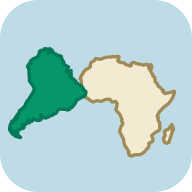
The Himalaya stand where the Indian plate presses against the Eurasian plate. That push goes on today, which is why the mountains are still rising. India arrived after a long journey north from the rest of old Gondwana. On the continental drift map you can watch the lands of today's Asia come together.
Countries and territories: Asia in our catalogue (49)
- Afghanistan
- Armenia
- Azerbaijan
- Bahrain
- Bangladesh
- Bhutan
- Brunei
- Cambodia
- China
- Georgia
- India
- Indonesia
- Iran
- Iraq
- Israel
- Japan
- Jordan
- Kazakhstan
- Kuwait
- Kyrgyzstan
- Laos
- Lebanon
- Malaysia
- Maldives
- Mongolia
- Myanmar
- Nepal
- North Korea
- Oman
- Pakistan
- Palestine
- Philippines
- Qatar
- Russia
- Saudi Arabia
- Singapore
- South Korea
- Sri Lanka
- Syria
- Taiwan
- Tajikistan
- Thailand
- Timor-Leste
- Türkiye
- Turkmenistan
- United Arab Emirates
- Uzbekistan
- Vietnam
- Yemen
Explore Asia further
World ExplorerTravel from country to country: answer a question about each one to take it, then walk on to its neighbours.
The other continents
Asia: frequently asked questions
Is Asia bigger than Africa?
Yes, about 1.5 times. Asia covers about 44.6 million km² and Africa about 30.4 million km² (both are estimates).
How many times larger is Asia than Europe?
About 4.4 times. Europe covers about 10.2 million km², counting from the Urals westward.
Is Russia in Asia or Europe?
In both. The border of Europe and Asia runs along the Urals, so the western part of Russia is in Europe and the larger eastern part in Asia. We list Russia on both continents and count all of its people in Europe, as the UN does.
Which country in Asia is the largest?
If Russia counts, Russia is the largest (17.10 million km² in all, part of it in Europe). Without it, the largest are China (9.60 million km²) and India (3.29 million km²).
Which Asian country has the most people?
India, with about 1.46 billion people (World Bank, 2025), just ahead of China with about 1.41 billion.
What is the highest point in Asia?
Mount Everest, 8,848.86 m above sea level, by the joint survey of Nepal and China in 2020. It is also the highest mountain on Earth.
Sources and definitions: Country areas: UN Demographic Yearbook 2024. Population: World Bank, 2025. Heights and depths: the measurements and lists named in the text (among them the joint Nepal and China survey of 2020, the National Park Service, Britannica). Antarctic ice sheet: Australian Antarctic Division. Antarctic Treaty: Secretariat of the Antarctic Treaty. Territorial claims and people at the stations: Australian Antarctic Division. UN Member States: United Nations (UN News, 2011). Cold record: WMO. Outlines: Natural Earth, public domain. Data methodology.