
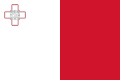
Malta: true size, area and map scale
Malta ranks 191 out of 200 by area (320 km²) and 167 out of 197 by population in this dataset. Its outline is shown at true scale and under different map projections.
Malta's capital, Valletta, is the most concentrated historic area in the world according to UNESCO.
Malta: true size, population, and map scale without illusions
Malta covers 320 km², ranking 191 out of 200 by area in this dataset. This is a very small territory at world scale, so precise comparisons are more revealing than a quick glance at an atlas. Within Europe, that places it 40 out of 44.
The area of Poland is about 977 times larger. This comparison is deliberately simple: Poland works as an easy reference point, and then it makes sense to move toward a similarly sized country. By area, the closest match is the Maldives.
The population is approximately 579,704 people, with an average density of 1,811.6/km². Malta ranks 167 out of 197 by population and 4 out of 197 by density. That is very dense settlement, where even a small area can contain many daily routes, cities, and administrative boundaries.
Within its continent, Malta represents about 0.01% of the area and about 0.1% of the population covered by this dataset. Its continental population rank is 38 out of 43, so area alone does not tell the full story.
Europe is familiar from school maps, yet its northern position means comparisons with countries nearer the equator can still be surprising. That is why Malta is best read through several lenses: raw numbers, an equal-scale outline, a comparison with Poland, and a matchup with the Maldives. Then the map stops being a picture and starts becoming a tool for discovery.
If you want to remember the scale quickly, compare Malta with a country of similar area and a country of similar population. By population, Montenegro is a useful next clue.
How to explore Malta on the map
The best path is short: compare outlines, check a country with similar population, then try the quiz. It turns numbers into something easier to remember.
The numeric values are used as comparative references for learning scale. Rankings include only countries and territories with a verified value in the selected sources.
Can you judge the population density of Malta?
Move from this country profile into a quick test powered by the same data.
One attempt, the same set for everyone
Size illusion · Build a streak and come back tomorrow for another map.
✦ Suggested 1vs1 Comparisons
Analyze interactive silhouette overlays and cartographic distortions for related pairs:


Malta vs Poland
Direct comparison against Poland as a common baseline.
View 1vs1 comparison →
Malta vs Maldives
Maldives covers 300 km² (nearly identical scale).
View 1vs1 comparison →
Malta vs Brazil
Comparison with a country from a different latitude to highlight map stretching.
View 1vs1 comparison →Size comparisons with Malta
Frequently asked questions about size and location
Malta covers 320 km². In this dataset, that ranks 191 out of 200 by area, and 40 out of 44 within its continent. The area of Poland is about 977 times larger.
The population is approximately 579,704 people, with an average density of 1,811.6/km². Malta ranks 167 out of 197 by population and 4 out of 197 by density. That is very dense settlement, where even a small area can contain many daily routes, cities, and administrative boundaries.
Two comparisons work especially well: Malta vs Poland as a familiar reference point, and Malta vs Maldives because their areas are very close. For population, Montenegro is another useful comparison.
Europe is familiar from school maps, yet its northern position means comparisons with countries nearer the equator can still be surprising. That is why a country's position on the map can mislead, while same-scale outline comparison usually gives a better intuition than a classic atlas.
Every projection moves a globe onto a flat surface and must trade something away: shape, area, direction, or distance. On this page, you can compare the impression created by Mercator, orthographic, and equal-area views.
Start with the numbers, open a 1vs1 comparison with a similar country, and then try the size-illusion quiz. That sequence combines facts, visuals, and play, making the scale easier to remember.